Best Buddy for Life
Mar 04, 2026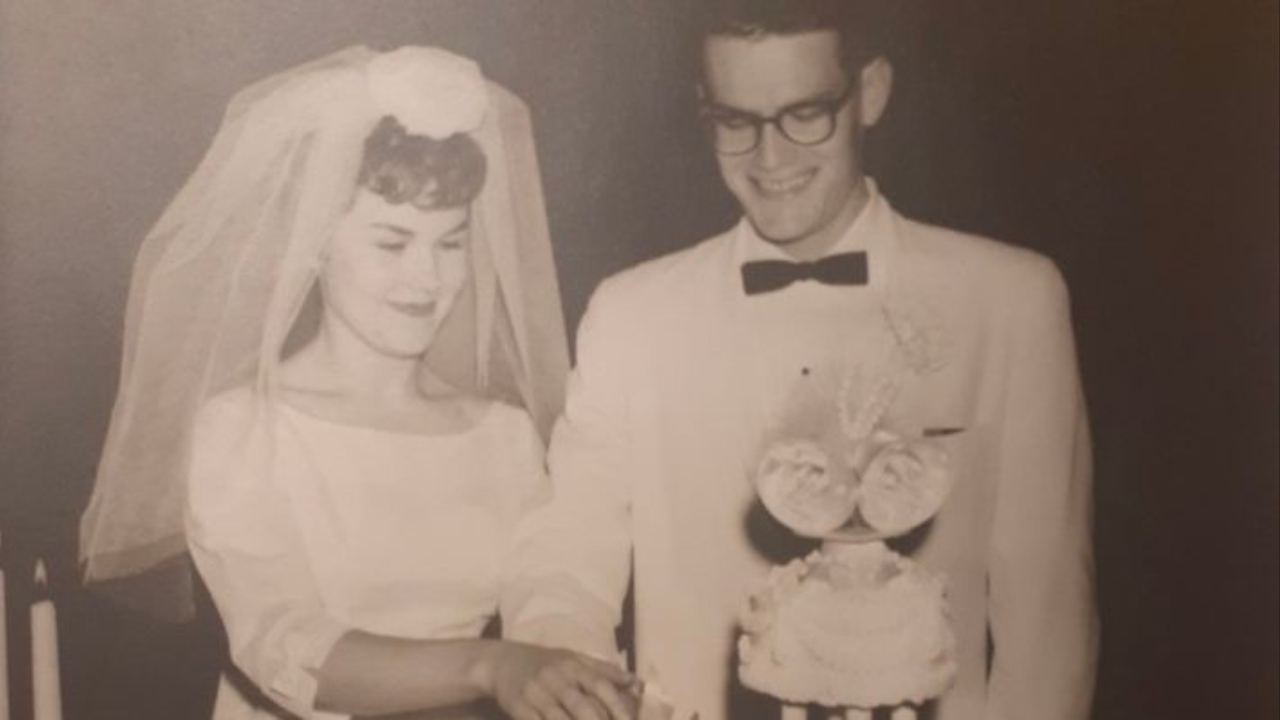
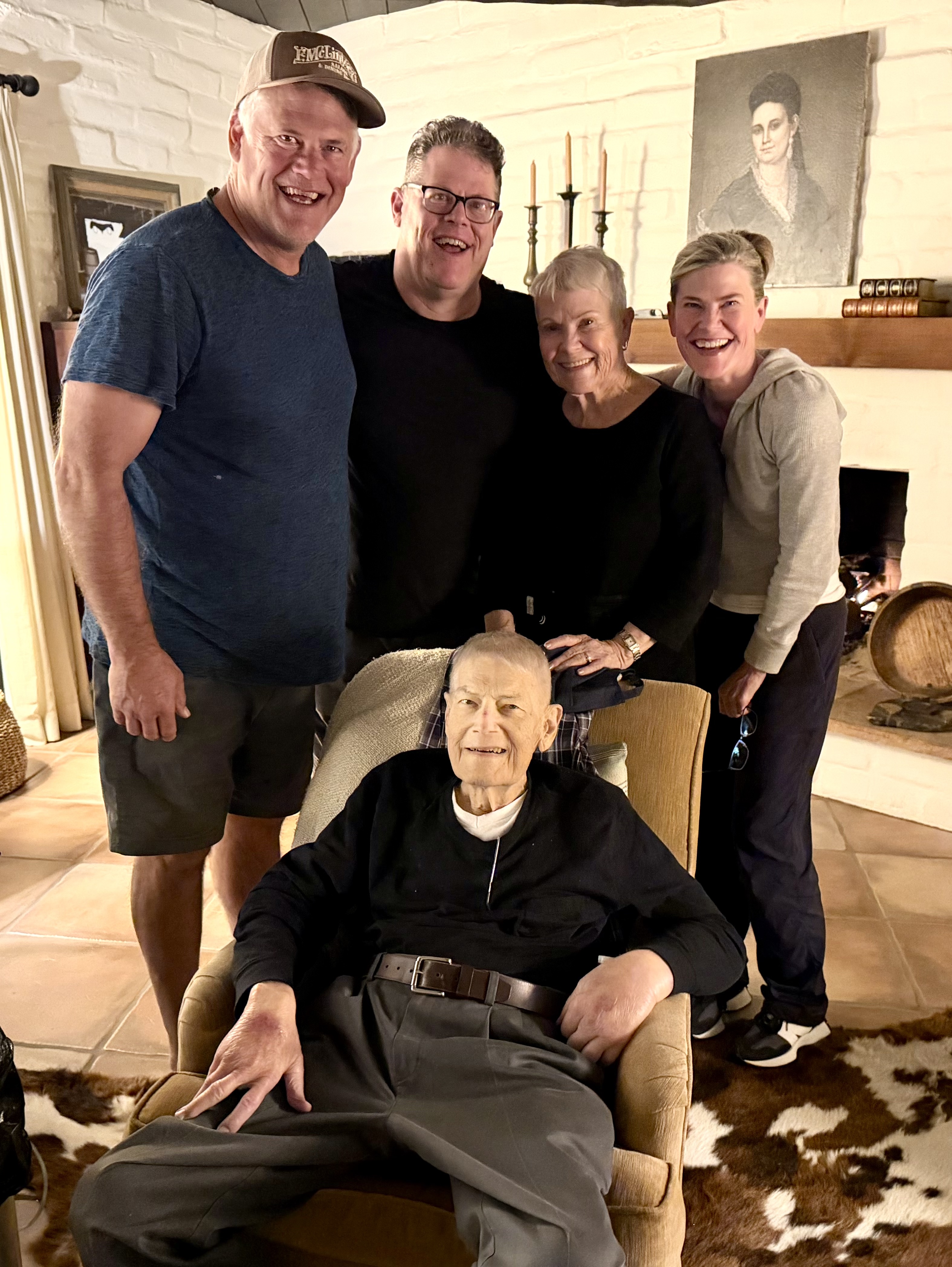
My father, Philip Huston Hutchens, was known as Felipe, FatherBear, and most notoriously, as Hutch. Or Grandpa Hutchie. Never Doctor, though he earned the title. He had a PhD and the intellect to match, but he never once wanted to be called Doctor. He believed titles created distance. And my dad was a bridge-builder.
He was the kind of man who could talk books, philosophy, politics, and religion in a single sitting, and somehow make you feel smarter just by being in the room.
He was relentlessly curious. Always reading. Always learning.
Often knowing more about his medical condition than the residents overseeing it. Not because he needed to prove anything. But because he believed in participating fully in his own life.
And participate he did.
At the age of 29, doctors told him he would be lucky to see 30.
He lived to 85.
Seven pacemakers. Prostate cancer. Radiation. Androgen deprivation shots. More procedures, surgeries and recoveries than most people could bear with grace. But he was a warrior when it came to his health, not out of fear, but out of devotion. His motivation was simple and unwavering: family.
He defined success as time together. That was it.
Not accolades. Not status. Not wealth.
Time together.
And he meant it.
He attended every single basketball game, baseball game, gymnastics meet, and wrestling match my brothers ever played in, and every theatrical play I ever performed in. He did not miss a single activity. Not one. He sat in bleachers and folding chairs, in auditoriums and drafty gyms, fully present, fully invested. You could scan the crowd and know exactly where he was, leaning forward, attentive, happy for us.
He and my mother were married for 64 years. Sixty-four years. When asked the secret to their marriage, my mother would always smile and say, “Your father makes me laugh.” His humor was not performative. It was tender. Disarming. It softened hard edges. It carried them through illness, through raising three strong-willed children, through cultural change and personal challenge.
He loved comedians like Bob Newhart and would retell a famous joke, stretching the timing, adding a detail, embellishing it just enough to make it even funnier than the original. He understood the sacred rhythm of a punchline. He understood that laughter is medicine.
He coached Kiwanis for both of my brothers. Season champions more often than not. This was pre–Title IX, so there wasn’t a place for me on the team. But he made one. I kept the books. I sat in the dugout. I learned the rhythm of innings and the language of belonging. He never made me feel less included. He simply expanded the circle.
That was his way.
In the 1970s, he started the LGBTQ committee at the United Methodist Church. In the seventies. When doing so was neither popular nor safe. He taught Sunday School to the high school teenagers as well as the Hartwell class for those over sixty. He was anti-authoritarian in the most thoughtful sense, skeptical of systems that excluded, unwavering in his belief in a loving, inclusive God. He loved unconditionally. Fiercely. Without caveat.
And somehow, in all of that strength, he was also deeply gentle.
As a grandfather, he enjoyed nothing more than spending time with his grandkids and cheering them on in their endeavors. The same man who had filled bleachers for us now filled them for another generation, eyes bright, heart wide, measuring his life not in years but in moments shared.
When I was eight years old, he asked me to help him change the oil in the car. I didn’t want to. It felt messy. Boring. Something to ask of my brothers, perhaps.
He looked at me and said, “If you help me, we’ll be Best Buddies for Life.”
Best Buddies for Life.
I crawled under that car.
We were.
On his last day on this earth, a little over two weeks ago, I leaned over him and whispered the final words I would ever say into his ear:
“I love you, Dad. Thank you for being my Best Buddy. Your Best Buddy loves you. It’s okay to let go. You were an extraordinary father and an extraordinary human. We’ve got Mom.”
I walked out of the room.
Eight minutes later, he took his last breath.
There is a sacredness in timing that humbles me still.
Grief, I am learning, is not linear.
It does not move politely from denial to anger to acceptance like stepping stones across a quiet stream. It spirals. It revisits. It surprises. One moment I am telling a story about him with laughter in my voice, and the next I am undone by the sight of his empty chair.
Grief comes in waves.
Some are gentle, lapping at the edges of memory, a phrase he used, a political debate I wish I could have with him, a medical article I want to send him. And some waves knock me flat. A song. The smell of motor oil. The echo of a perfectly timed punchline. The words “Grandpa Hutchie” spoken in my niece’s voice. The ocean of it can feel merciless.
And yet, I am realizing, the depth of our grief is a reflection of the depth of our love.
My sorrow is vast because my love for him is vast.
The ache I carry is proportional to the gift I was given in being his daughter.
He was an extraordinary father and human.
Not because he was perfect. But because he was principled. Devoted. Curious. Inclusive. Funny. Brave in his body. Brave in his beliefs. Brave in love.
He expanded every circle he stepped into.
He showed me that success is measured in shared dinners and dugout stats. In 64 years of making your wife laugh. In fighting for one more year, one more Christmas, one more conversation around the table. In filling the bleacher seat for your children and then doing it all over again for your grandchildren. In reading deeply. Thinking critically. Loving generously.
He showed me that a real legacy is not what you achieve.
It’s who you include, and how you treat them.
And now, in this season without him physically here, I understand something else.
The Best Buddy promise did not end under that car when I was eight.
It did not end eight minutes after I left his bedside.
It lives in the way I love.
In the way I include.
In the way I define success as time together and how I show up fully present, with love in my heart.
Grief may not be linear.
It may rise in waves.
But beneath it all is something steady and eternal:
A father’s love.
A daughter’s whisper wrapped in gratitude and devotion.
And if your story did not include a father’s love, let this be your remembering:
Love is not defined by biology. It is defined by presence.
Whoever has held you in protection, seen you in truth, or believed in you before you believed in yourself, that is love.
And wherever you have offered that same devotion to another, wherever love has been given or received, a sacred bond was formed … one that even death cannot undo.
Love becomes their legacy, and through every loving act of yours, you give their legacy breath.
With so much gratitude in my heart for 54 years of love,
AmyK
Ready to let Heart-Lit Leadership become Your Magnetic SuperPower?
✨ Join our IGNITE BRILLIANCE Community! ✨
You’ll receive brilliant insights, provocative questions for Self-discovery, inspirational videos and special offers from AmyK sent right to your inbox.
We respect your privacy. Change your email preferences at any time.
Author